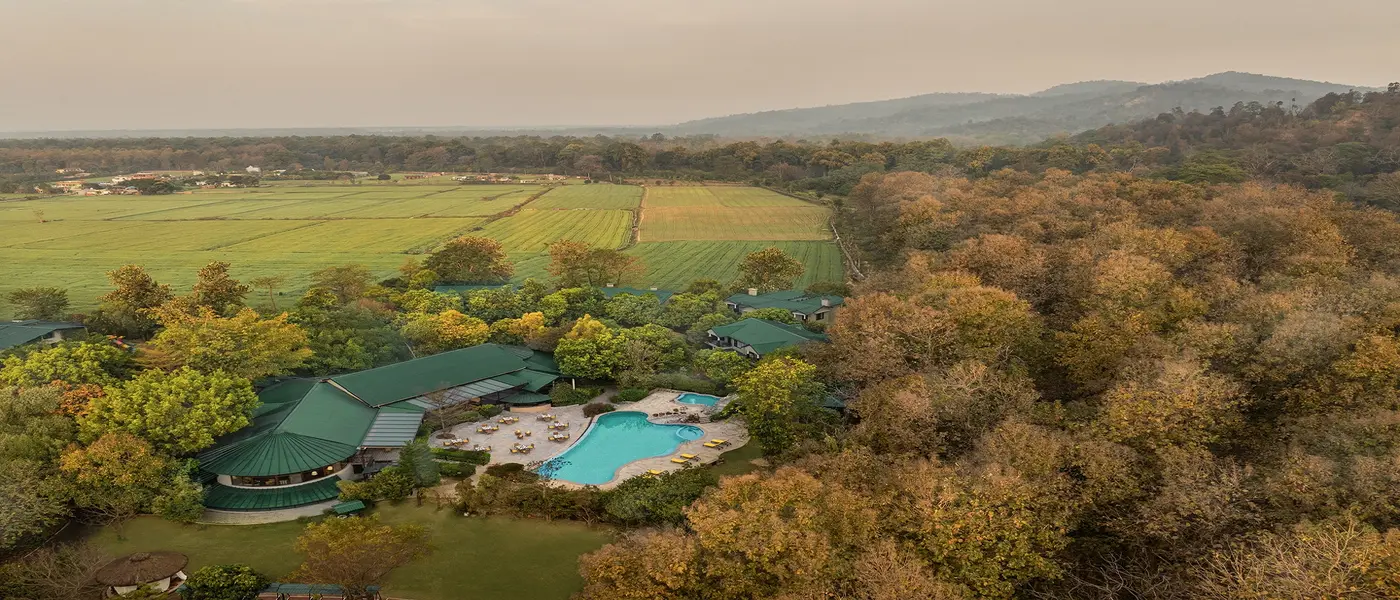
When Mr. Kamal Tripathi and Mrs. Sunita Tripathi first acquired the land that would become Aahana, it was bare earth. On the edge of the vibrant Bijrani Zone of Jim Corbett National Park brimming with biodiversity.
Over the next twenty years of deliberate effort, what stands here today: 4,500 trees, over 250 recorded bird species, a living soil ecology, and a resort that has never taken more from the land than it has returned. Walk along any trail within the estate and you are in shade. The treeline breaks only where you want it to: at the edge of a deck or through a forest villa window.
There is a direct line between this history and the quality of the experience here. The kitchen organic garden is twenty metres from the kitchen. The naturalist knows the name of every bird you will hear before breakfast. Furniture and decor inspired from the same region and crafted by local artisans. At Aahana, sustainability is not what constrains the experience. It is what makes it possible.
What responsible luxury looks like in practice
Aahana manages 100% of its water and waste on-site. The Root Zone Treatment Plant, one of the largest of its kind in Asia, uses Canna plants to recycle waste water naturally, without chemicals and without energy consumption. Treated water is returned to the land. Organic kitchen waste is composted and fed back into the kitchen garden. Plastic has been systematically eliminated from guest-facing operations.
Energy follows the same logic. Solar panels supply hot water across the resort, with solar assisted heat pump backups. Sunlight is treated as a design resource villa orientations are calibrated to maximise natural light through the day. At certain hours, the interior light shifts in a way that renders artificial lighting unnecessary, cool in the mornings and warm by late afternoon.
The architecture speaks the same language. A contemporary regional vernacular, informed by North Indian forest typologies, built for the climate, and materially honest. Local stone. Traditional North Indian plastering techniques on interior walls. Ceiling treatments drawn from the weaving patterns of Kumaoni village homes. You would not confuse these spaces with a resort built for a different landscape. They were made for this one, from the materials that were already here, by the hands that knew how to use them.

From the Garden to the Table
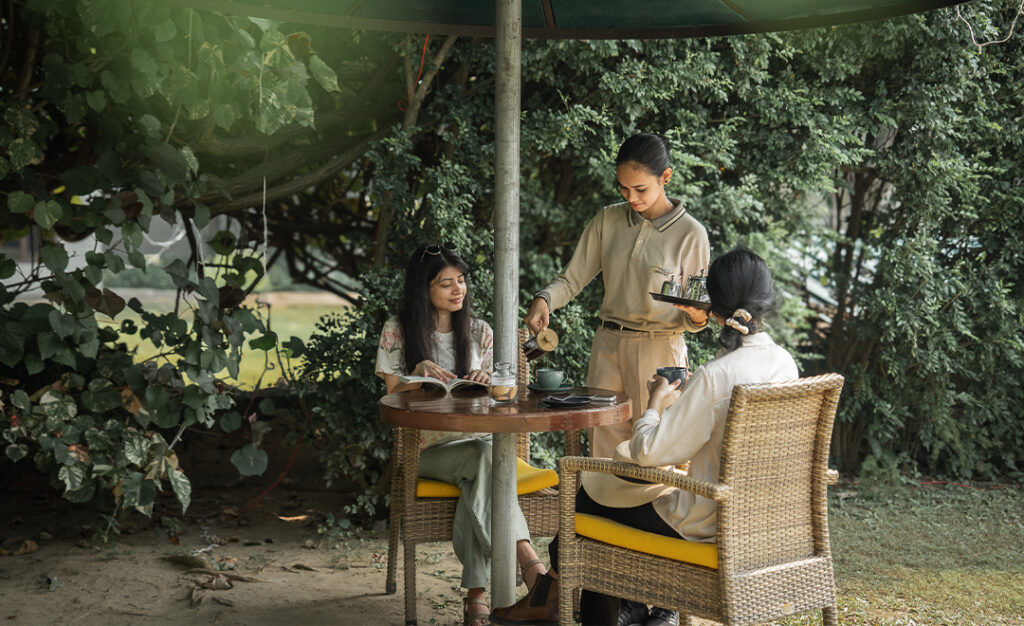
The on-site organic kitchen garden supplies the restaurant directly. Produce harvested in the morning is plated b y afternoon. The distance from garden to kitchen is measured in metres, not supply chains. It is the reason the food tastes the way it does. Herbs cut at that hour carry something that refrigerated logistics cannot.
Aahana Harvest Dining centres on what the garden produced that day, a farm-to-table meal in the most literal sense of the phrase. The Kumaoni Thali offers a passage through the traditional flavours of the region: dishes that carry history, not just flavour. For those who prefer their meals outside the dining room, private decks, forest clearings, and garden settings are all options. Full vegetarian, vegan, and allergen-conscious menus are available throughout.
The kitchen philosophy mirrors the land philosophy: take less, return more, and do it with care.
Keepers of Kumaon | 99% local staff and why it matters
Ninety-nine percent of Aahana’s team comes from the surrounding Kumaoni region. The naturalists grew up reading the forest they now guide guests through. They know where the light falls differently in October, or which trees the hornbills favour. The chefs cook from a culinary tradition that does not appear on any trend report. The hospitality staff welcome you not as trained employees executing a service standard, but as storytellers of the land themselves.
Many have been with the resort for ten years or more. Some have brought their children into the team. That kind of continuity produces something no onboarding programme can manufacture: genuine ownership. The warmth consistently noted in guest reviews is not an operational output. It is the warmth of people who know exactly where they are and why it matters.
tends beyond employment. Aahana sources fresh produce, artisanal crafts, and services from local businesses across the region by design. Small-scale farmers, traditional craftspeople, and local vendors are not alternative suppliers– they are the supply chain. Sustainability at Aahana is also an economic model, one that ensures the resort’s growth benefits the community it sits within it. A thriving local economy keeps traditions alive, trades practised, and the cultural fabric of the Kumaon intact. Guests experience the result directly: in the food, the craftsmanship, and every human interaction on the property.

Spa L'Occitane en Provence | Built for This Place
The newest addition to Aahana is its Spa L’Occitane en Provence in Jim Corbett, the French beauty brand that holds B Corp certification and has shaped responsible practice in the global spa industry for over a decade. L’Occitane’s founding commitment to ethical sourcing, ingredient transparency, and ecological responsibility made it a natural fit: a spa that extends the resort’s values rather than sitting alongside them as a separate amenity.
The spa shares a direct boundary with Jim Corbett National Park. Treatment rooms sit within metres of an active tiger reserve. Skylights open above the jacuzzi’s to tree canopies: they are not only a view, they are company.
The design follows the same principles as the wider resort: local stone throughout, walls finished in traditional North Indian plastering techniques, ceilings inspired by the weaving patterns of Kumaoni village homes. Curtains are handwoven by local artisans using sustainable materials. Sixty handcrafted pots,, were commissioned exclusively from a single artisan. Nothing mass-produced.
All hot water is solar-powered, with solar assisted heat pump backup. Energy-efficient lighting and HVAC throughout every treatment room. Zero single-use plastic across all treatments, packaging, and guest amenities. Every material choice, energy system, and operational decision was held to the same standard applied across Aahana.

The Recognition That Follows From the Work
Aahana holds the Outstanding TOFTigers Eco Rating for 2023 to 2026, the highest tier issued by the Tourism and Conservation Foundation and among the most rigorous sustainability assessments in Indian hospitality. It evaluates wildlife impact, waste management, energy use, community engagement, and conservation contribution across the full operation. Outstanding is not a category with many occupants.
Travel + Leisure named Aahana among India’s Best Sustainable Resorts in 2023. TripAdvisor Travellers’ Choice 2024. India’s Most Preferred Travel and Tourism Brand 2018 to 2019.
From freedom fighters to forest keepers
The Tripathi family’s connection to this region predates the resort by generations. Descendants of freedom fighters who shaped the social fabric of Uttarakhand, they came to this land not as developers but as custodians. The decision to restore the land before building on it, to let the forest return before inviting guests into it, was not a commercial calculation. It was a value.
That value now expresses itself in every layer of Aahana: the kitchen garden, the solar infrastructure, the composting system, the naturalist programme, the spa, and the 99 per cent local team that runs all of it. What exists here was not built quickly, it was built correctly.