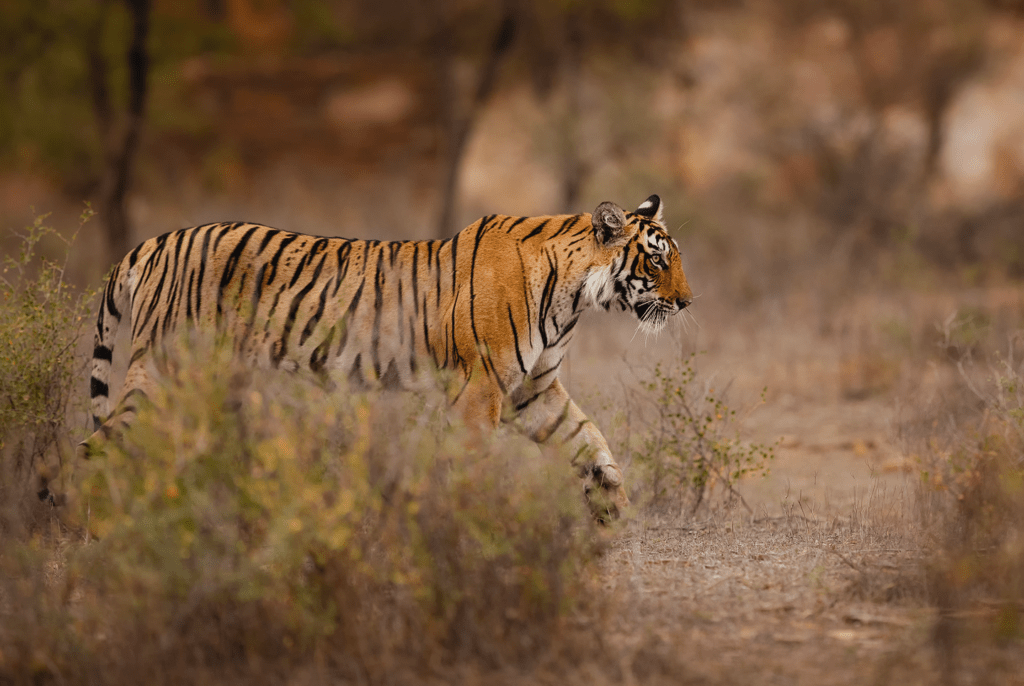
There is a kind of safari guest who has been to Corbett three times and seen a tiger once, briefly, from a great distance. And there is a kind of safari guest who comes to Dhela or Jhirna and returns having watched a tigress and her two cubs cross the road forty metres ahead. The difference, almost entirely, is the zone and timing.
Jim Corbett National Park spans approximately 520 to 521 square kilometers across multiple zones, each with its own terrain, ecology, and biodiversity. Each attracts different wildlife at different hours in different seasons. But among returning guests, serious wildlife photographers, and the naturalists who have watched this forest for years, two zones come up consistently: Dhela and Jhirna. Both sit in the southern part of the reserve. Both are fifteen minutes from Aahana. Both are open throughout the year.
What Makes Dhela Different
Dhela is an eco-sensitive buffer zone, added to the Corbett tourism map in 2014. The management framework here differs from the park’s core zones: fewer vehicles per shift, and a quality of immersion than some busier zones.
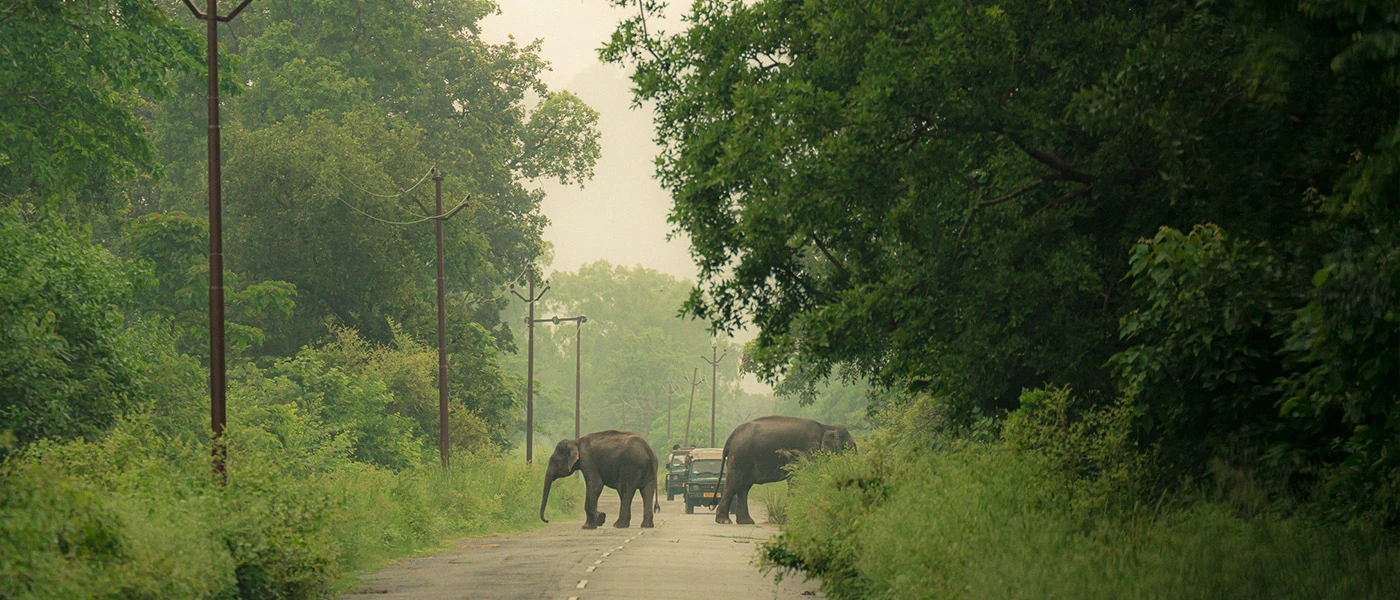
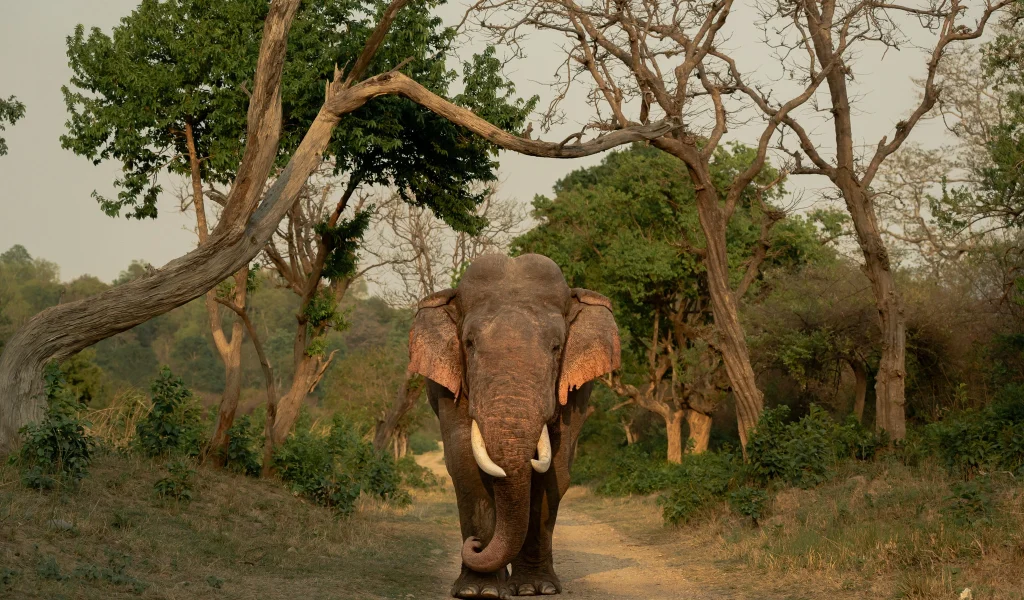
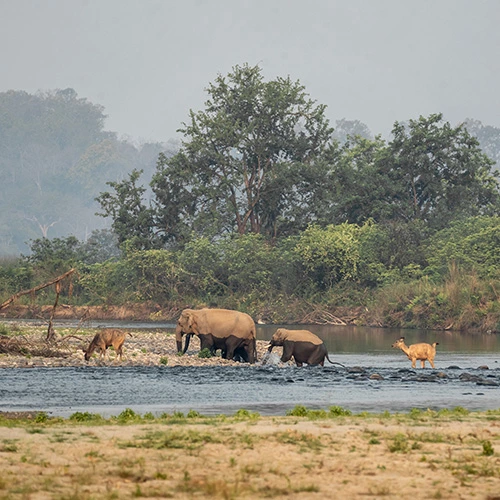
The terrain rewards every kind of observer. A main road runs alongside open grasslands, and unpaved routes branch off into denser cover of sal forests. The grasslands draw elephants in significant numbers, herds moving through at dawn with unhurried authority, one that is difficult to describe from a distance and unforgettable up close.
Tigers cross this main road. Dhela, Jhirna and Phato, are interconnected forests so there is a lot of animal movement across these zones. Since they share connected forests: they are not separate wildlife populations but parts of the same continuous system. A tiger seen in Dhela this morning may have been in Jhirna the evening before. Forests recognise no administrative boundaries.
Dhela is also Corbett’s most celebrated birding zone. The variety is exceptional and rewards patience over luck. Hornbills move through the sal canopy. In June, baya weaver birds begin nesting on the grassland, their suspended, precisely woven nests among the most extraordinary constructions in Indian birdlife. In winter, sloth bears are sighted, emerging from forest edges in the cooler morning hours.
Dhela is also one of Corbett’s richest birding landscapes, where sal forests and open grasslands attract a remarkable diversity of species. In the forests, keep an eye out for the Great Hornbill, Indian Grey Hornbill, Emerald Dove, along with several species of eagles, warblers, and drongos. The grasslands are home to birds such as the Indian Roller, Hoopoe, Long-tailed Shrike, and finches.
The Case for Jhirna
Jhirna is different in character: larger, deeper, and more enveloping. It has been part of the tiger reserve since 1994 and has remained open year-round since; Jhirna and Dehla are among the few zones in Corbett that do not close for monsoon. This alone makes it significant. The ecology makes it essential.
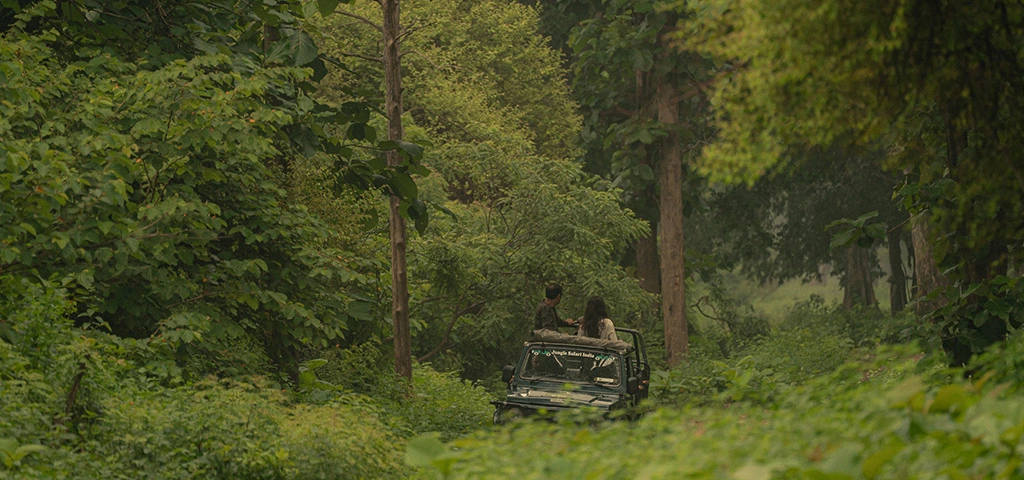
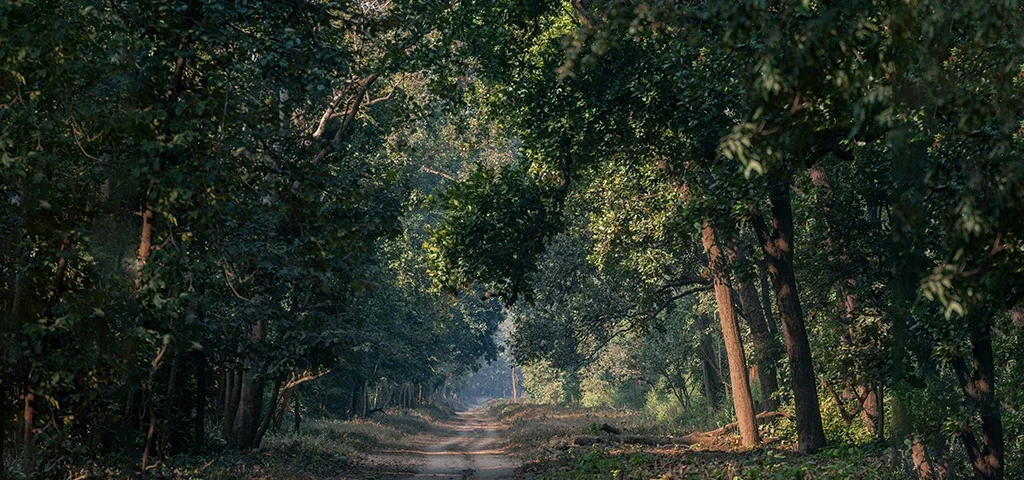
Once past the Jhirna gate, the roads are entirely unpaved. The forest closes around the vehicle. River crossings punctuate the drive, and in summer, these channels are where wildlife concentrates. Jhirna is a known elephant corridor: the herds that move through it follow routes established over generations.
Currently, two tigresses with cubs are resident in Jhirna. A third has been sighted in the corridor between Jhirna and Dhela. The population is healthy, the movement is active, and these are conditions that produce the sightings guests describe for years afterward.
In winter, look up. Along the steep cliff edges of Jhirna, Himalayan griffon vultures gather in numbers that command attention: large, deliberate birds riding thermals above a forest that continues its life below entirely unaware.
During monsoon, Jhirna transforms. The rivers run full. The forest deepens in colour and density. Visibility is affected, but wildlife is active, and the sightings this season produces, with fewer vehicles and less disturbed movement, can be among the most memorable the zone offers.
Jhirna is equally rich in birdlife, with its dry deciduous forests and riverine landscape attracting a wide variety of species. During your safari, you may spot the Crested Serpent Eagle, Great Hornbill, or Oriental Pied Hornbill. Along the riverbeds, kingfishers are commonly seen, including the Common Kingfisher, White-throated Kingfisher, and Pied Kingfisher. The landscape is also known for sightings of Blue-tailed Bee-eaters, Chestnut-headed Bee-eaters, Red Junglefowl, and, during the summer months, the Asian Paradise Flycatcher.
The Language of the Forest
The most valuable skill on a Corbett safari is not patience, though patience matters. It is attention: the ability to read what the forest around you is communicating.
Every ecosystem has a language. In Dhela and Jhirna, the vocabulary includes the alarm call of the spotted deer, a sharp bark repeated with increasing urgency when a predator is near. The langur’s call from the canopy, an urgent response to a tiger’s proximity that is immediate and recognisable to anyone who has heard it. Even the sudden stillness of a flock of birds carries information.
Your guide reads all of this in real time. The forest is not a stage on which animals occasionally appear. It is a continuous conversation between species, and a skilled naturalist translates that conversation for the four hours you are inside it. This is partly why staying for the full duration matters so much: the forest speaks most clearly at the opening and the close, when predators are moving and the rest of the ecosystem is responding.
Most guests arrive looking for a tiger. Some of them, in their focus on one animal, miss what the forest is actually offering. A great hornbill sighted in the Dhela canopy at close range is rarer than a distant tiger. The guests who return from Corbett with the most to say are usually the ones who let the forest decide what it wants to show.
Why Proximity Matters More Than Most Guests Realise
The first and last forty-five minutes of a jungle drive produce a disproportionate share of significant sightings. Predators are transitioning between night and day. Prey animals are moving toward water. The ecosystem is at its most communicative.
Aahana is fifteen minutes from both Dhela and Jhirna. A 5:30 am departure means gate arrival before 6am. The forest’s first hour belongs entirely to you.
The return matters equally. An evening safari ending at 7pm, followed by forty-five minutes back through town, is a different experience from one that ends at 7pm and has you back at the resort in time for dinner while the sky still holds some light.
What Changes by Season
Both zones are open year-round, but the experience shifts substantially with the season.
October to February: The forest thins and sightlines open. Sloth bear sightings are most reliable in both zones. Himalayan griffon vultures appear along the cliff edges of Jhirna. Migratory birds arrive across both zones from October onward. The cold in an open jeep at 6 am is genuine: layer properly.
March to June: Water sources concentrate wildlife movement. Sightings near dry riverbeds and waterholes increase as the season progresses. June marks the beginning of baya weaver nesting in Dhela. Morning safaris take priority as temperatures rise through the day.
July to October: Dhela’s grasslands are at their most vivid. Jhirna’s rivers run at full volume and the forest thickens and deepens in colour. Visibility is lower in the denser vegetation, but the zones are significantly less crowded and wildlife movement is less disturbed. For guests who have done winter and summer safaris, a monsoon visit to either zone is a genuinely different experience of the same forest.
Planning Your Safari from Aahana
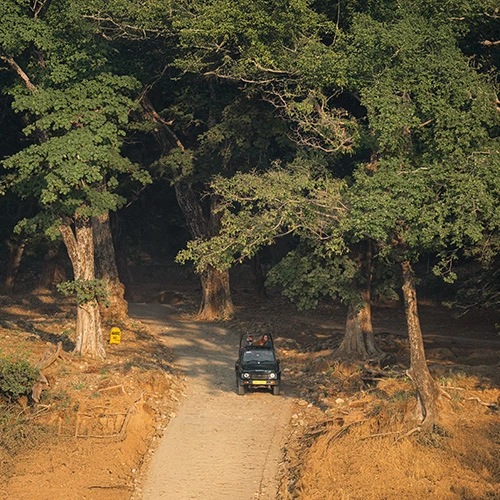
Aahana’s team handles permit bookings and safari briefings for all guests staying at the resort. Permits for Dhela and Jhirna fill quickly: two to three weeks in advance during peak season, faster around long weekends and school holidays. Booking at least three days before arrival allows the team to assign preferred jeep vendors rather
Contact reservations for details: a full guide to safari preparation, including what to wear, how permits work, and how to plan your day around the forest’s pace, is in our Delhi to Jim Corbett weekend guide.
Plan your safari stay at Aahana
Frequently Asked Questions
Are Dhela and Jhirna open year-round?
Yes. Both zones remain open through all seasons, including monsoon, when most of Jim Corbett’s core zones close. This makes them the primary option for guests visiting between July and October.
Can you do both Dhela and Jhirna in one day?
Yes. A morning safari in one zone and an evening safari in the other is entirely possible, with separate permits for each. One permit covers one zone per safari slot.
How long is a safari in Dhela or Jhirna?
Four hours. Morning and evening timings vary by season.
What ID is required to book and enter?
Any valid government-issued ID. The same ID used at the time of booking must be carried to the gate. Permits are non-transferable and issued against individual names.
Can you book a safari on the same day?
Yes, if slots are available. Same-day availability is more likely during weekdays and the shoulder season.
Are phones allowed inside the zones?
As of 2026, mobile phones are not permitted inside the forest during safaris. Plan accordingly: leave devices at the resort.
Is there accommodation inside Dhela and Jhirna?
Forest rest houses managed by the forest department are available in both zones for those wanting to stay inside the reserve. These are modest, limited in availability, and booked separately through the forest department.
Will I have a guide inside the zone?
A government-assigned naturalist accompanies every safari. Depending on availability, an Aahana naturalist can join guests. Speak to the team at the resort to arrange this.
Is there a minimum age for safari?
There are no official age restrictions for safaris.
What is the difference between Dhela and Jhirna Zones?
Dhela is a zone with open grasslands, a main road, and unpaved tracks through sal forest. It is particularly known for birding, elephant movement, and tiger crossings along the grassland corridor. Jhirna is larger, fully unpaved once inside, with river crossings and denser forest cover. It is a known elephant corridor with a resident tiger population and is the better zone for photographic depth and variety. Both are connected to the same forest system and the two zones together offer a comprehensive picture of this part of the Corbett reserve.