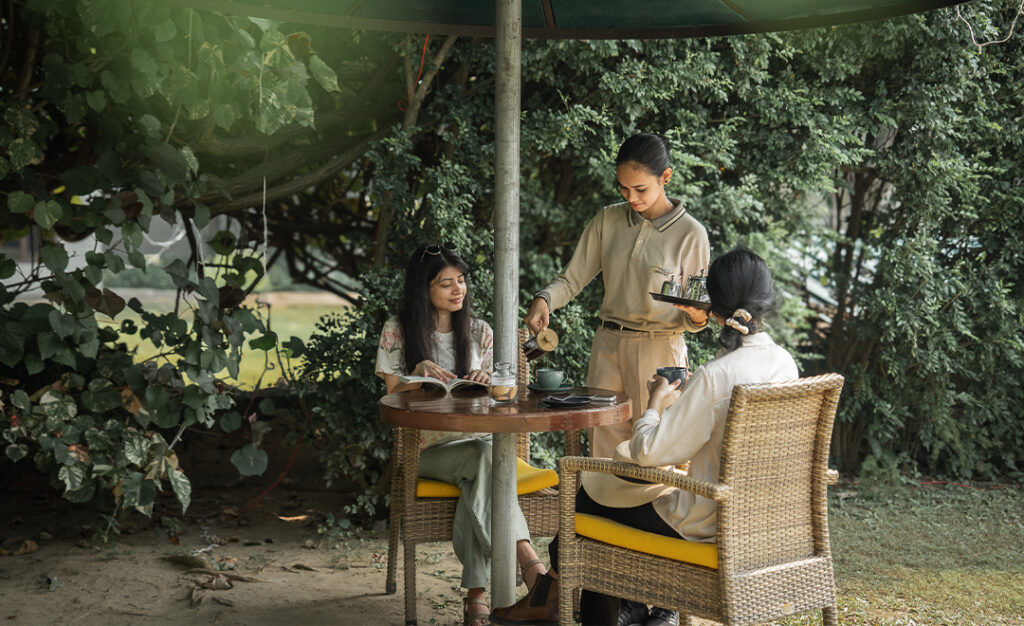
Tanya and Amar arrived in July with a plan: ten days at Aahana, a new destination for work from home, and no itinerary. They had chosen monsoon intentionally, partly because someone had mentioned that it’s the best season to slow down, and partly because they needed somewhere to call home, temporarily. Ten days became twelve. Twelve became fifteen. By day eighteen, when they finally checked out, Tanya said they had recharged more in that stay than in any other holiday.
Names changed to maintain guest privacy.
Monsoon in Jim Corbett is, for many guests, the best-kept secret about this region. It was the wildlife photographers who noticed first, then the naturalists, then the couples who wanted to be somewhere simple, yet extraordinary without the peak-season crowds. Now the word has gotten out: slowly, among the people who actually seek the forest rather than simply pass through it.
The Park is Not Closed. Not really!
The most common belief about Jim Corbett in monsoon is that it shuts entirely. It does not. Several zones reduce access during the heaviest rains, but Dhela and Jhirna, two of the most rewarding safari zones in the reserve, remain open through the full monsoon season. And lucky for guests at Aahana – they are just 15 minutes away from us.
Over the years, considerable effort has gone into maintaining all-season access to these zones, and the understanding of monsoon Corbett has evolved accordingly. What was once the best-kept secret among nature lovers and wildlife photographers has gradually found its audience: not guests who came despite the rain, but guests who came for it.
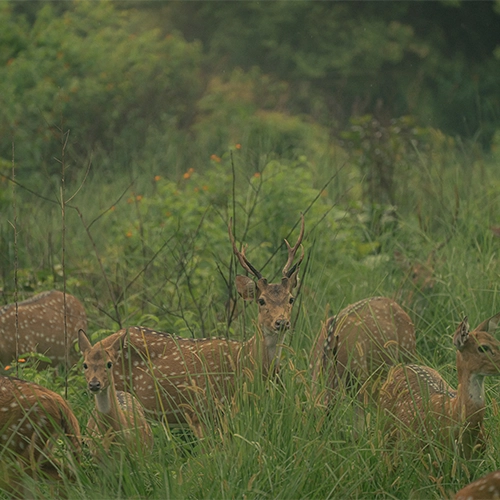
What the Forest Actually Looks Like
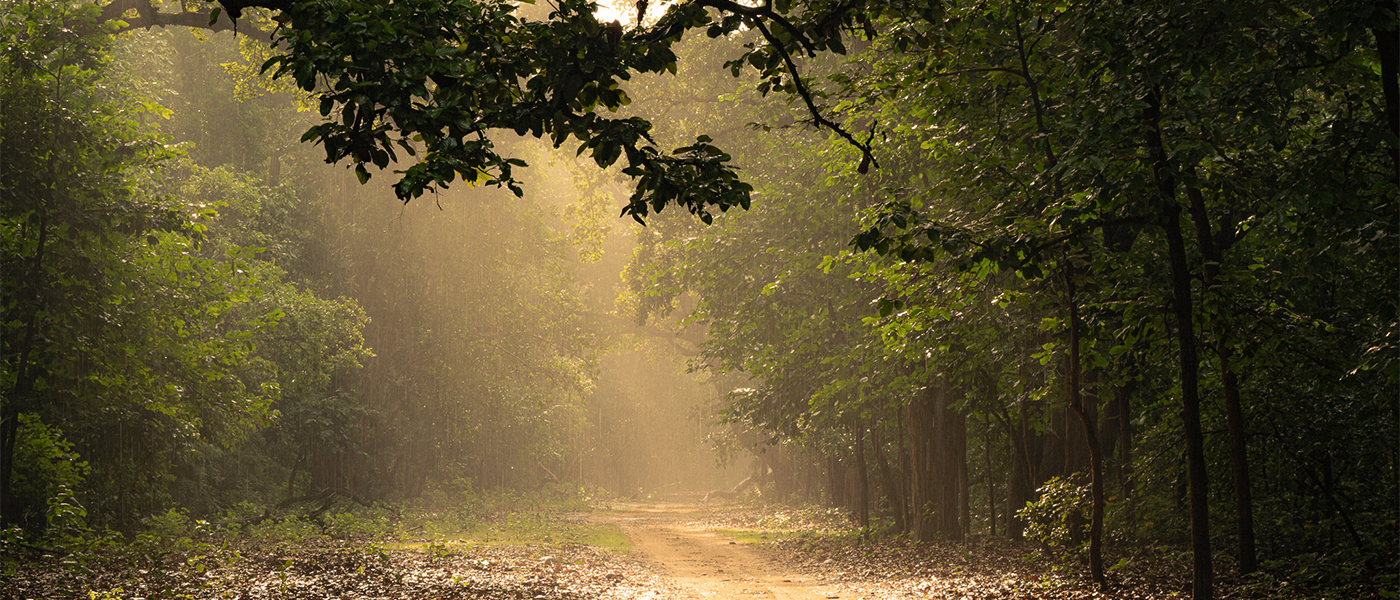
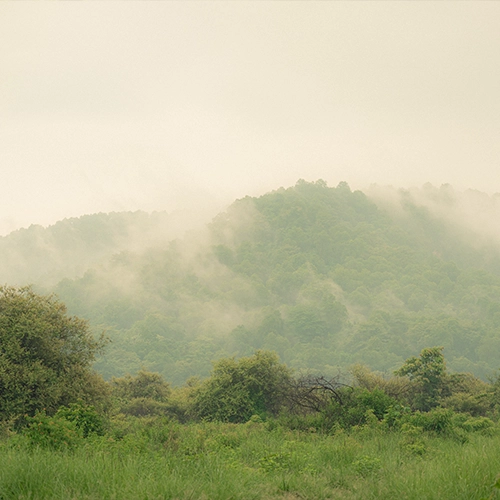
There is really no way to adequately prepare someone for how green Jim Corbett becomes in monsoon. Not the managed green or the garden green. A density and depth of green that changes the colour of the light filtering through it: saturated, yet almost unreal. The kind of green that makes you wonder if you are looking at a photograph. The sal trees hold their canopy high, the grasslands fill, and the riverbeds run. Every surface that was dry in April is alive by July.
Wildlife photographers travel specifically for these conditions. The forest never photographs more beautifully than between July and September. The light through rain-washed foliage has a quality that cannot be replicated in any other season. Is it dense, yes; but even more rewarding.
This is the forest looking most like itself.
The Wildlife: What Changes and What Begins
The baya weaver, and the art of the nest
If one creature defines the monsoon season in the Dhela zone, it is the baya weaver bird. The male baya bird spends the early monsoon weeks doing something remarkable. He selects a long strand of grass from the grassland, flies it to a jangli (wild) Ber tree, and begins to weave. Tightly, methodically, and over days: a beautiful nest suspended from Ber trees that is also, unmistakably, a proposal.
The female baya bird comes to inspect. She has high standards for judging the design and architecture of this nest. If it does not meet her standards, she rejects it. And the male bird starts again. Males are known to build four or five nests in a single season to impress the females. The standards, apparently, are very high.
At Dhela they are very active and very loud about it. You will hear them before you see them: incessant chirping, constant flight between the grassland and the tree, grass strands trailing behind them. They truly weave magic in the forest. Once you begin observing their pattern, hours go by, it is moments like these why the monsoon produces a kind of joy that other seasons cannot.
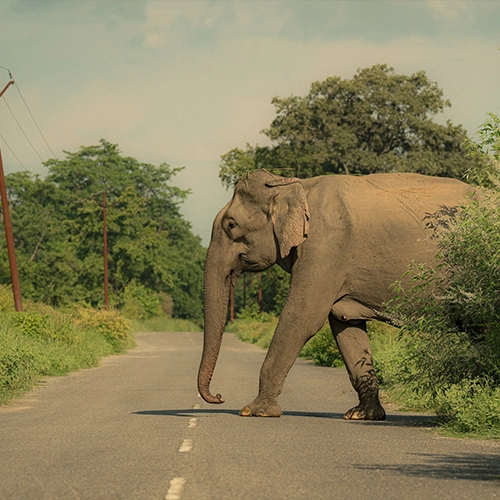
Asian elephants
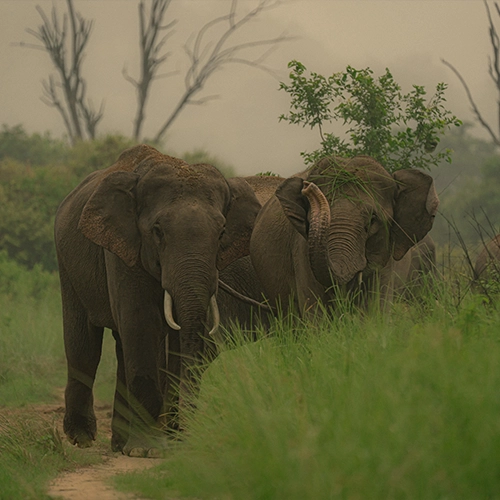
Dhela and Jhirna are major elephant corridors, and monsoon pulls the herds into the open. Fresh fodder, filled rain pools, and cooler temperatures bring large groups into the grasslands where they are visible from the main road. Crossings happen in the early morning or late evening. Groups of fifteen, twenty, sometimes more, moving between forest corridors on routes they have followed through seasons that predate the roads beside them.
Tigers and leopards
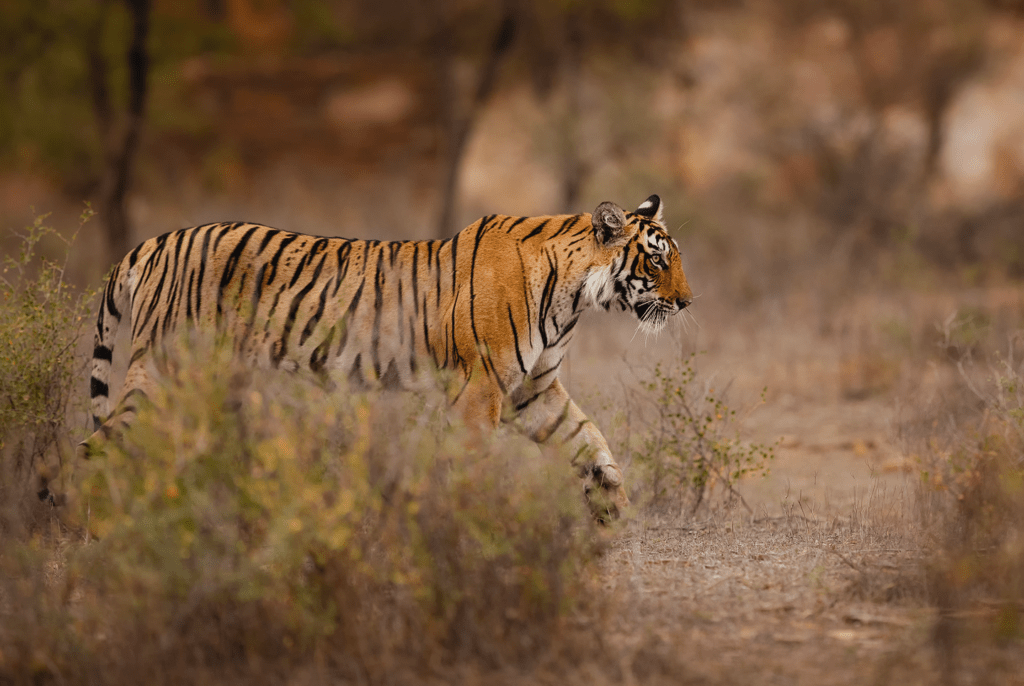
The tiger does not disappear in the monsoon. It re-marks, patrols and moves with strategy. Territorial behaviour intensifies as the vegetation changes and rain washes away scent trails. Royal Bengal tigers and leopards patrol and restate their territories, which gives lucky safari-goers sighting opportunities that are genuinely unusual. The foliage is thick, and that is partly the point: finding a tiger between dense green is a different kind of sighting from a winter encounter in an open forest. Photographers travel specifically for these shots. They are not easy sightings, but when witnessed, they are worth it.
Birds
Birdwatching in Jim Corbett during monsoon peaks significantly, in a way that surprises even experienced naturalists. Resident breeding birds, cuckoos, and waterbirds thrive in the rain-washed canopy and along overflowing riverbeds. Kingfishers are very active. Eagles, herons, and flycatchers move through the forest in numbers. Migratory arrivals begin as early as August. The Jhirna zone, already one of the strongest birding locations in the region, reaches a different level entirely in the monsoon months.
A note the Aahana naturalists make repeatedly: guests arrive looking for a tiger and sometimes see something rarer. A great hornbill at close range in the Dhela canopy is less expected than a tiger and, depending on what you are looking for, and for bird lovers even more extraordinary.
The rest of the forest
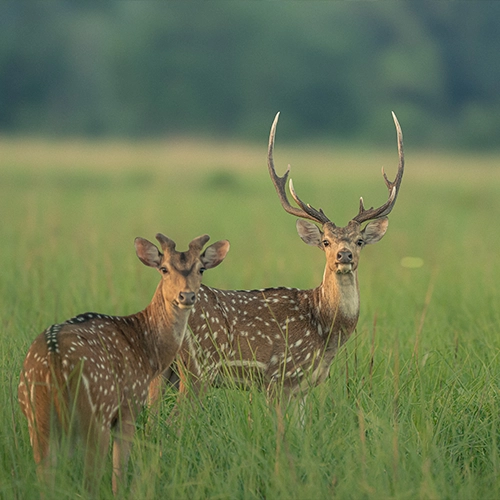
Spotted deer, barking deer, sambar, and wild boar venture into open ground more frequently in the monsoon. Sloth bear sightings are recorded. The predator and prey dynamic of the forest is more visible when the grass is full and movement is abundant.
The Safari Zones: What to Know Before You Go
Dhela and Jhirna
Both are fifteen minutes from Aahana. Both are open through the full monsoon season.
Safari Timings: Morning 5:30am to 9:30am, evening 3pm to 7pm.
Trails may be modified depending on rainfall intensity. Elephant crossings, slush patches, and waterlogged sections are part of the experience. These are not inconveniences, instead they are what a living forest looks like from the inside.
By mid-August in most years, the rains are moderate. Trail conditions stabilise. Safari operations become more predictable and clarity improves. For guests who want the full monsoon energy alongside good conditions for wildlife photography, August to September is the strongest window.
Planning safaris in monsoon
Safari permits for Dhela and Jhirna are government-issued and non-refundable. Safari operators do not refund either. During monsoon weekdays, availability is generally better than peak season, but conditions can shift quickly. The Aahana team coordinates safari bookings and can advise on current zone conditions, real-time slot availability, and whether morning or evening timing makes more sense for the day in question. Booking at least three days before arrival allows the team to arrange preferred jeep vendors and quality vehicles rather than taking whatever the rotation assigns. However, for guest safety, the forest department reserves the right to suspend safaris without prior notice, so depending on availability, you can also book your safaris once you arrive.
If monsoon safaris are part of why you are coming, speak to the Aahana team before finalising your dates. Safari prices do not change in monsoon.
What Happens When It Rains at Aahana
Aahana was designed for this. Literally: every room has a private porch, balcony, or covered sit-out facing the forests or the lawn. Large windows, sitting areas, and beautiful views. Misty mornings over the Bijrani zone visible from your room. The forest is not a backdrop at Aahana. It is the entire foreground. An experience woven into each stay.
When the rain comes, the glass and wood deck at Dhikala restaurant is where guests tend to gather. The roof is covered but the view is not. From a table there, you look over the pool and directly into the forest of Jim Corbett National Park behind it. The wood under your feet also has a history: reclaimed from ship breaking yards in Alang, this timber has sailed seas before settling permanently at Aahana. Here, hi tea arrives each evening at the same table. Snacks that favour the season, and beverages accordingly.
Every room has been designed so the forest comes in. It is not possible to look in the wrong direction.
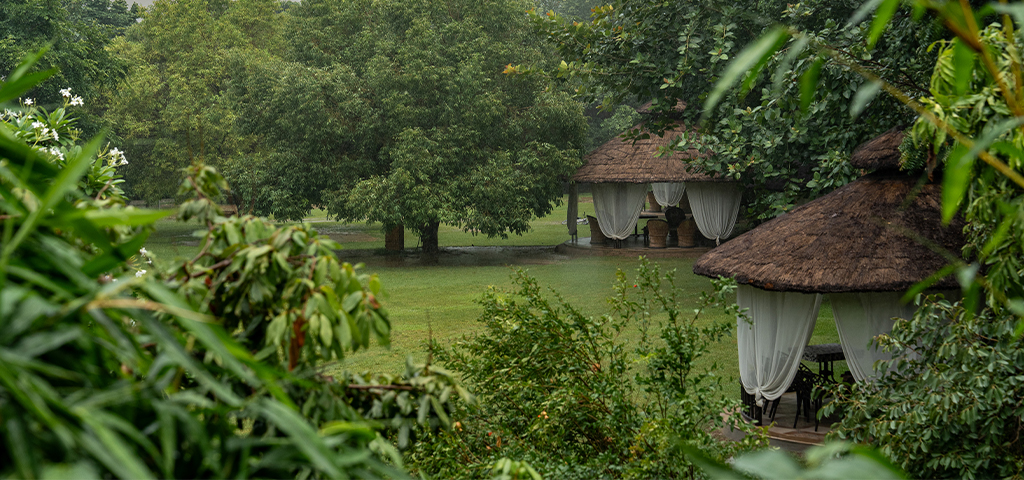
The property’s citronella and lemongrass planting throughout the grounds means that outdoor evenings at Aahana are genuinely outdoor and comfortable. Guests sit out in the gazebos after dark, practice yoga on the lawn, enjoy evening tea on their balconies, without the experience that most forest stays in the monsoon involve. One guest who visited during the rains noted: not a single mosquito across the entire stay. The planting has been done with this in mind.
Hira's Seven Days
Hira came for rejuvenation, and built a week around what the forest offered.
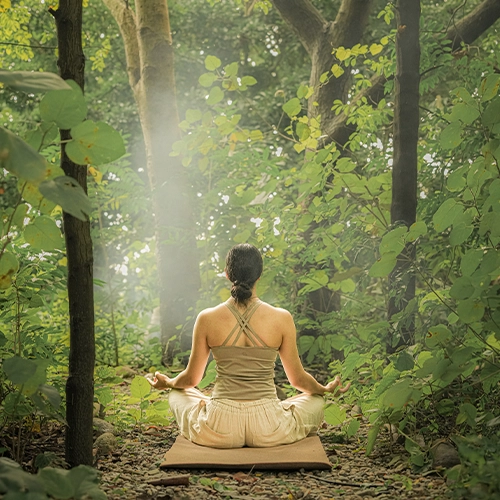
Mornings began with yoga on the lawn or meditation by the water feature in Spa L’Occitane’s meditation garden, depending on whether the rain had cleared. Some days the Aahana naturalist joined for a walk through the property’s trails. The paths on the estate’s 13.5 acres were wet and the birds were exceptionally loud.
Afternoons she spent at Spa. The jacuzzi under the skylight with rain falling on the glass above. The sound of it on the roof while the forest moved beyond. A meditation session in the garden. The spa shares a direct boundary with Jim Corbett National Park, and its design brings the forest in through skylights and materials and the quality of the space around the treatment tables. In monsoon, that design intention is most fully expressed.
Evenings: tea on the balcony of her Rangers Suite, which has a bathtub with a window that looks into the forest and a balcony with a direct view of the Bijrani zone. Tandoori snacks from the poolside grill. Live music some evenings under the covered deck, and dinner at her own pace.
She came for seven days. She left transformed and rejuvenated, with a promise to be back each monsoon. That promise has remained intact for the last two monsoons now.
Name changed to maintain guest privacy.
In Their Own Words | Guest Experiences at Aahana
A guest who visited in monsoon wrote simply: “Must visit in the monsoon to view the greenery of the place. Don’t miss the exquisite pool and hi tea.” She added that she would definitely come back.
A guest from Guwahati who stayed in the villas with his family called it a royal stay and noted that even if someone were told the park zones were partially closed in monsoon, he would still recommend making the trip entirely for what Aahana offers as a property.
A guest who had come four times, on his first monsoon visit, noted his specific surprise: not a single mosquito in the resort across the entire stay. He and his family sat outdoors in the gazebo and did open-air yoga without any of the usual monsoon discomfort. The same guest also mentioned the organic kitchen garden, and fresh mangoes sourced from nearby partner farms, and the way the property had been built from what was once entirely bare land.
A guest who discovered the glass deck put it directly: “We loved sitting in the extended wooden deck outside the restaurant from where you can see the pool and the forest behind. It was our favourite spot.” She also noted the view from her room into the forest as absolutely mesmerising, and added that the staff went out of their way to make the stay feel like home.
When Exactly to Come
July is the most intense month. Peak green. Heavier rains. Most variable trail conditions. Best for guests who want the full, undiluted monsoon experience and are comfortable with the forest living its best life.
August moderates through the month. Mid-August onward sees trails stabilise and conditions become more predictable. Excellent birding. Strong wildlife movement. The baya weaver nests are well-established and very active. Good for both wildlife and photography.
September is the shoulder season of the monsoon, and often the favourable month for photography. The forest is still fully green, the riverbeds still full, and the crowds remain low. Trail conditions are the most reliable of the three monsoon months. For guests who want monsoon Corbett without monsoon’s most unpredictable elements, September is the answer.
Read our latest article: Best time to visit Jim Corbett
Monsoon at Aahana: What You Get When You Book
The following benefits sit alongside Aahana’s 2026 Signature Offers (Forest Celebration, L’Occitane Forest Retreat, and Corbett Safari Offer), available throughout the monsoon season:
Guaranteed weekday room upgrade. One category up, confirmed on Sunday through Thursday stays. Excludes Private Pool Villas. Weekend upgrades are subject to availability and not applicable on designated long weekends.
Other benefits, if you want to create your own package outside the Signature Offers:
- 20% off Spa L’Occitane en Provence. On treatments during the stay. Not valid alongside other active spa promotions.
- A monsoon welcome ritual. A warm, season-specific arrival experience at check-in.
- Best rate, direct. Via the Aahana reservations team. For best monsoon pricing.
- Complimentary stay for Kids. For children under 12.
- The Rain Hour. 20% off signature cocktails, 15% off all cocktails, daily from 4pm to 7pm.
- Complimentary high tea. Every evening, with every stay.
Frequently Asked Questions
Is Jim Corbett open during the monsoon?
Dhela and Jhirna zones remain open year-round, including through the full monsoon season. Several other core zones reduce access during peak rains. Guests at Aahana are fifteen minutes from Dhela and Jhirna.
What wildlife can you see in Jim Corbett during monsoon?
Baya weaver birds are actively nesting in the Dhela grasslands from June through monsoon. Asian elephants are frequently seen in open corridors in both Dhela and Jhirna. Tigers and leopards patrol and re-mark territories. Spotted deer, barking deer, sambar, and wild boar are highly visible. Birdwatching peaks significantly with kingfishers, eagles, herons, and flycatchers active throughout. Migratory arrivals begin starting from August.
Is Jim Corbett safari available in monsoon?
Yes, in the open zones. Morning timings: 5:30am to 9:30am. Evening timings: 3pm to 7pm. Trails may be modified based on rainfall intensity. Safari prices remain the same during monsoon. Permits are non-refundable and issued against individual names; coordinating with the Aahana team in advance is recommended.
Are mosquitoes a problem in the monsoon at Jim Corbett?
At Aahana, citronella and lemongrass planting throughout the property significantly reduces mosquito presence. Guests consistently describe being able to sit outdoors, in the gazebos and on the lawns, through evening hours without discomfort.
When is the best time to visit Jim Corbett in monsoon?
All three months offer a distinct experience. July is the most dramatic: peak green, and most variable conditions. August moderates from mid-month onward. September offers the most stable conditions.
How many days is ideal for a monsoon visit to Jim Corbett?
Two nights is the minimum for a functional trip. Three nights allows for more safaris, proper resort time, and the pace that makes monsoon worthwhile. Several guests who come for three nights extend their stay once they arrive. Many guests choose long stays during monsoon.
How are sightings in Jim Corbett during monsoon?
Activity in the forest and animal behaviour changes during monsoon, Tigers and Leopards remark and patrol their territories, Elephants come out to grasslands for improved fodder, and nesting season begins for birds like Baya Weaver birds. However, visibility becomes a challenge. Monsoon rains bring a new life into the forest, but with that comes a thick lush green forest making animal tracking difficult.
What should I wear on a monsoon safari in Jim Corbett?
Forest colours: greens, browns, neutrals. Light and breathable clothing. A waterproof layer for the jeep. No perfume or heavy scent. Binoculars. Camera protection for rain. The Aahana naturalist team can provide a full pre-safari briefing covering what to wear, carry, and look for.